• Jeniffer online site

      Hello there! I'm Madam Jennifer, and I am absolutely thrilled to welcome you to the world of Applied Biology.

      If you’ve ever looked at a biological process and thought, "That’s cool, but how can we actually use it to solve a problem?"—then you are in exactly the right place. Applied Biology is where the "magic" of nature meets the "logic" of technology. It’s not just about memorizing the parts of a cell; it’s about understanding how we can harness those cells to create sustainable energy, develop life-saving medicines, or protect our food supply.


      What to Expect in This Journey

      In this course, we aren't just observers of life; we are problem solvers. Here is a glimpse of what we will explore together:

      • Innovation: Learning how biological systems can be "engineered" for human benefit.

      • Practical Skills: Moving from theory in the textbook to application in the lab and the field.

      • Critical Thinking: Analyzing the ethical and environmental impacts of biological advancements.

      My Promise to You

      My goal is to be more than just your lecturer. I am here to be your guide as you navigate the complexities of this field. I value curiosity, hard work, and—most importantly—the courage to ask "Why?" and "How?".

      "Biology gives you a brain. Life turns it into a mind. Applied Biology turns that mind into a tool for change."

      I am looking forward to seeing the unique perspective you bring to our sessions. Let’s get ready to roll up our sleeves and dive into the fascinating work ahead!

      Welcome aboard                                                !Image result for appliesd biology course

      (You can edit or remove this text)

    Available courses


    Ecology is the branch of Biology that studies how living organisms interact with one another and with their physical environment. It examines relationships between plants, animals, and microorganisms, as well as factors such as climate, soil, water, and energy.

    Ecology helps us understand how ecosystems function, how natural resources are used, and how human activities affect the environment. It is important for promoting conservation, maintaining biodiversity, and ensuring sustainable use of natural resources.

    A laboratory and workshop practice refers to the structured activities carried out in controlled environments where learners gain practical skills and hands-on experience related to their field of study.

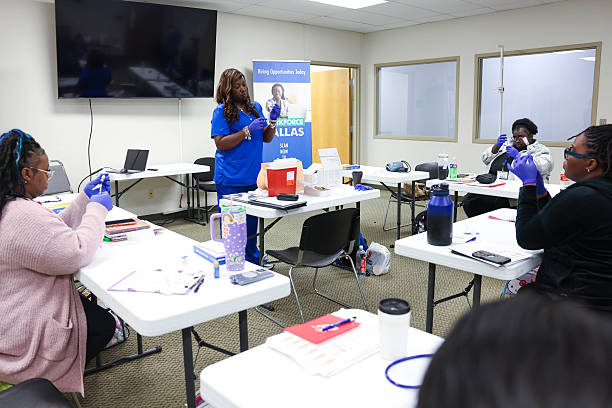
    In a laboratory, learners perform experiments, tests, and observations using scientific equipment and materials. This helps them understand theoretical concepts, develop accuracy, and follow safety procedures.

    In a workshop, learners engage in practical tasks such as fabrication, repair, construction, or technical operations using tools and machinery. It emphasizes skill development, creativity, and problem-solving.

    Overall, laboratory and workshop practice bridges the gap between theory and practice, enhances competence, promotes safety awareness, and prepares learners for real-world professional tasks.